



Smart Hospital with RTLS: Locating Devices, Ensuring Smooth Operations

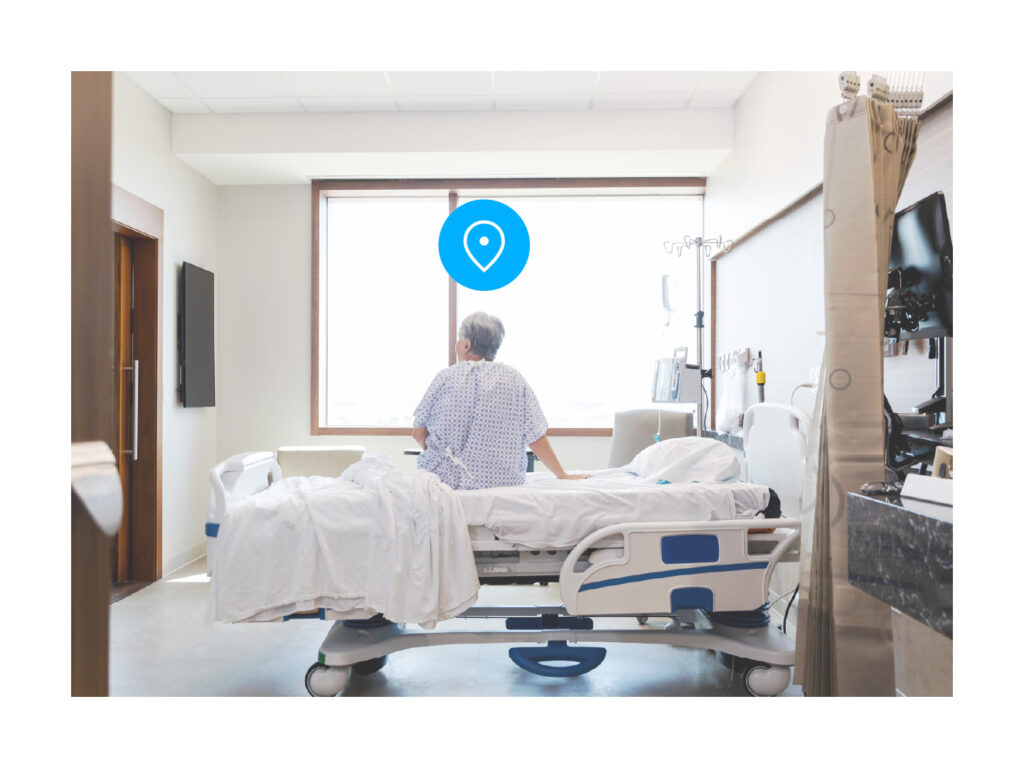
RTLS in the hospital makes medical equipment and clinical workflows findable in real time: infusion pumps, beds, wheelchairs and mobile devices, located at any moment.

As the foundation of the smart hospital, real-time location provides the data basis for smooth processes, better equipment utilization and more time for care instead of searching.

Today's challenges

Staff Shortages

Understaffed hospitals need to create even more efficient processes to better balance the workload of medical and nursing staff.

Search time

The search for equipment is time-consuming and frustrating for your staff. These non-value-added tasks reduce the time available for patient care and other important responsibilities.

Information Availability

Information is often passed along via phone or in brief hallway conversations. However, this information is quickly forgotten and outdated. This leads to delays and errors in daily operations.

Loss & Theft

Every year, hospitals lose equipment worth millions of euros. Preventing theft and loss of such equipment can quickly lead to improved results.

Patient Monitoring

To ensure the safety of patients, such as those with dementia, in an unfamiliar environment, their location must be constantly monitored to prevent them from entering potentially dangerous situations.

RTLS in the Hospital:
Real-Time Location for Clinical Operations

An RTLS (Real-Time Locating System) continuously locates medical devices and equipment, not just at single read points. This creates transparency across the entire equipment flow: from locating mobile medical devices to device transport between wards and protection against loss and theft. Unlike event-based capture, RTLS shows the exact position at any time and ensures that needed equipment is found immediately.
RTLS for smart hospitals from Cavea GmbH

Asset Tracking

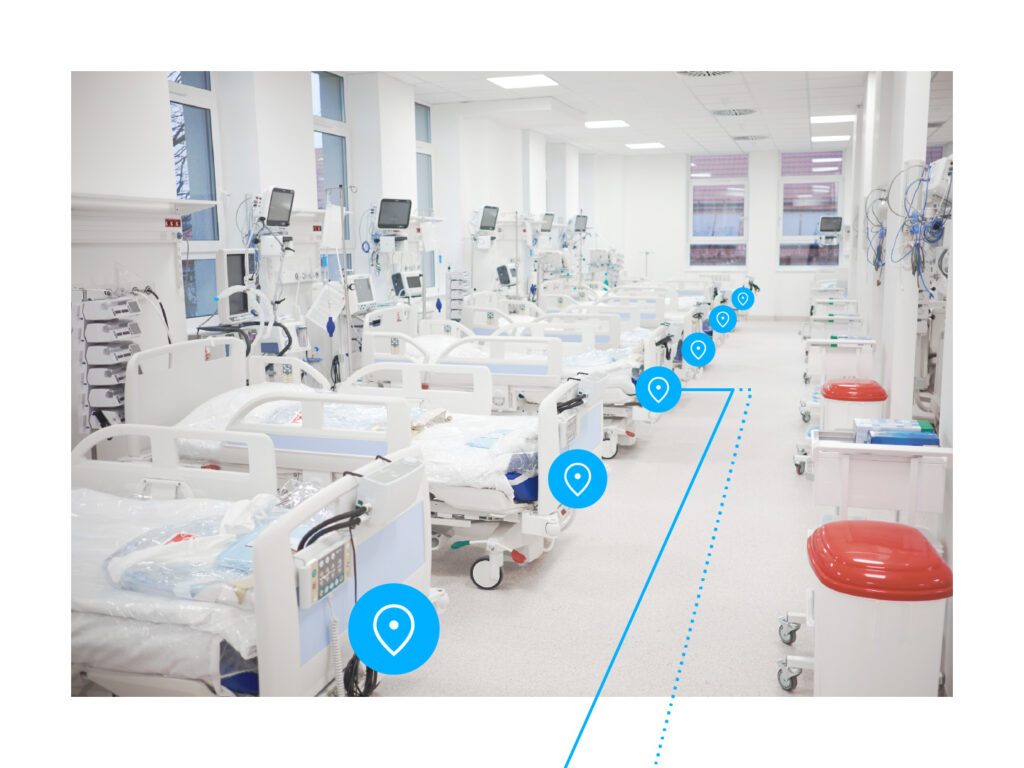
With Cavea’s intuitive software, instantly locate all essential medical equipment. You can see the current location of each device in real time, allowing nursing and medical staff to focus on patient care—not on searching for equipment.

The wireless, battery-powered system is designed for years of use and can be set up quickly and easily—without extensive wiring or the need for new outlets.

Key features:

Device Transport

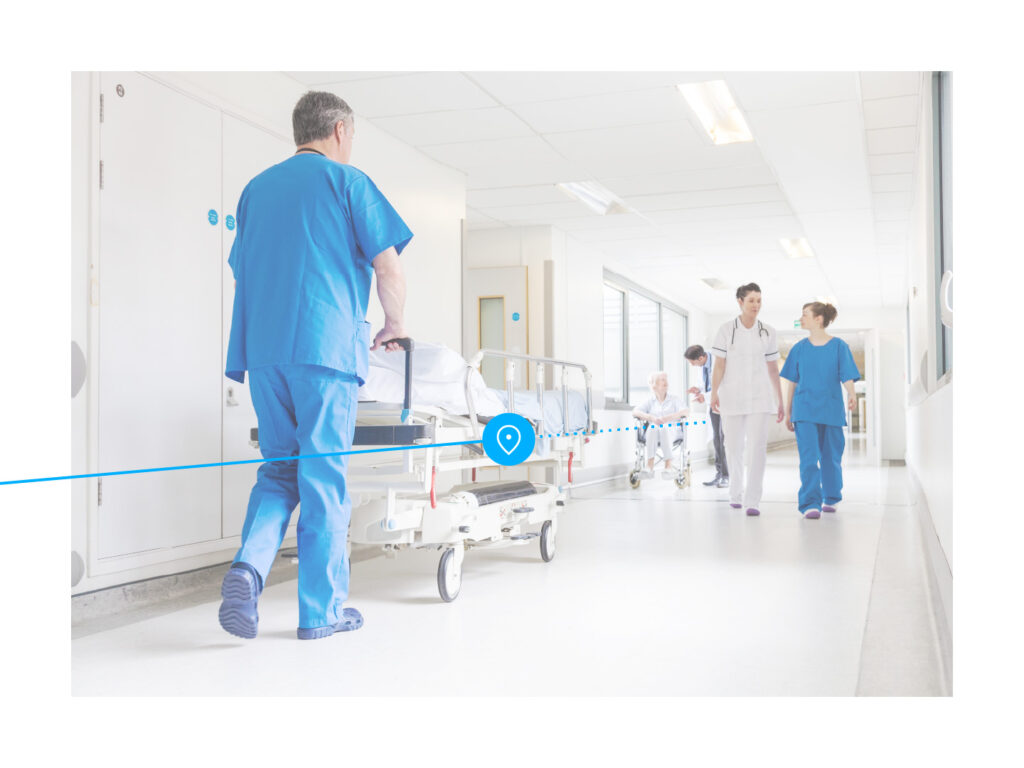
Optimize device transport with digital efficiency. Assign tasks to staff with a digital ticket that includes all essential details, such as the current location of the equipment. Forgotten phone calls for tasks become a thing of the past—each ticket remains active until completed, ensuring clear communication and accountability.

Key features:

Indoor tracking in smart hospitals with Cavea GmbH
Loss prevention with RTLS

Protection against loss and theft

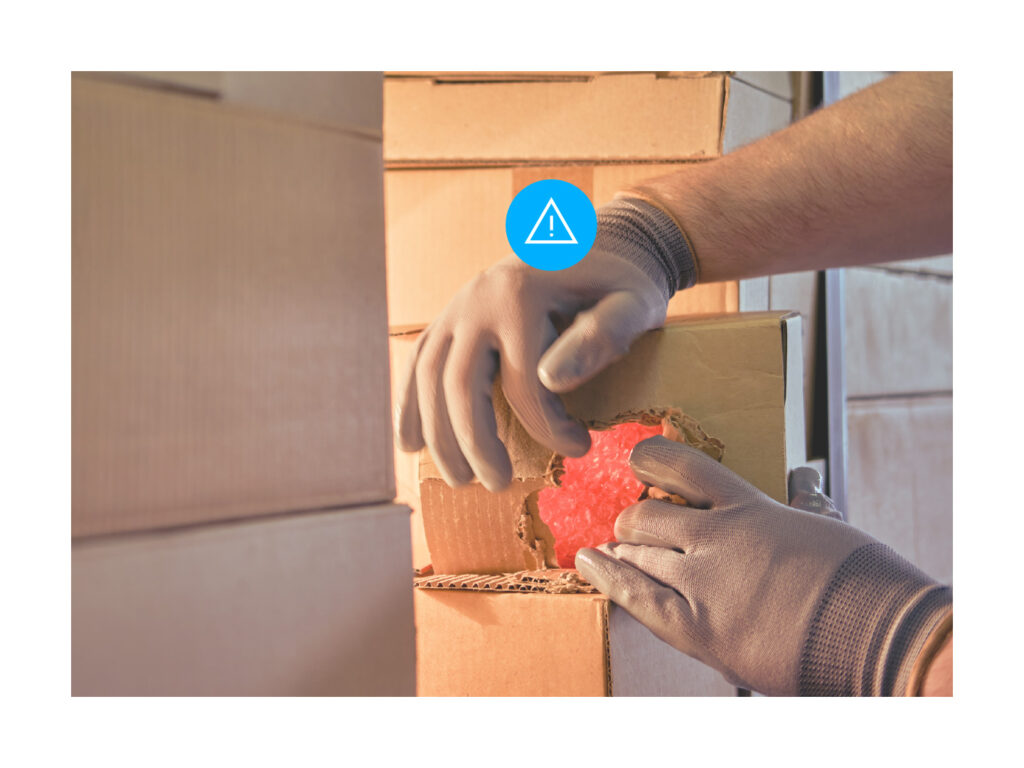
Easily secure your valuable equipment. With our RTLS solution, you receive immediate alerts if a device leaves its designated area. This helps protect your investments and prevent losses.

Key features:

Patient Monitoring

Prioritize patient safety with real-time monitoring. Receive immediate alerts when a patient—such as someone with dementia—approaches restricted areas. Discreet, wearable devices ensure patient safety and enable staff to respond quickly.

Key features:

Locating patients with dementia

Your Advantages

Our solutions deliver benefits that ensure a high ROI.

2 hours of time saved per day and employee

Enable your medical and nursing staff to instantly find what they need, reclaiming time to focus on caring for your patients.

30% Less Equipment Demand

Hospitals lose millions every year due to lost equipment, but existing equipment is also underutilized because it can’t be found. With real-time tracking, you can protect your valuable assets and avoid unnecessary costs.

Improved Communication

Say goodbye to missed calls and forgotten information. Digital task assignments ensure more clarity and reliability.

Complete traceability

Gain a complete overview of device movements and usage throughout the hospital, enabling better decision-making and resource allocation.

Optimized process quality

Digitize your work processes to increase efficiency and optimize workflows so that your team can focus on the essentials.

Seamless interoperability

Eliminate data silos. Our solutions can be easily integrated into your existing software.

How it works

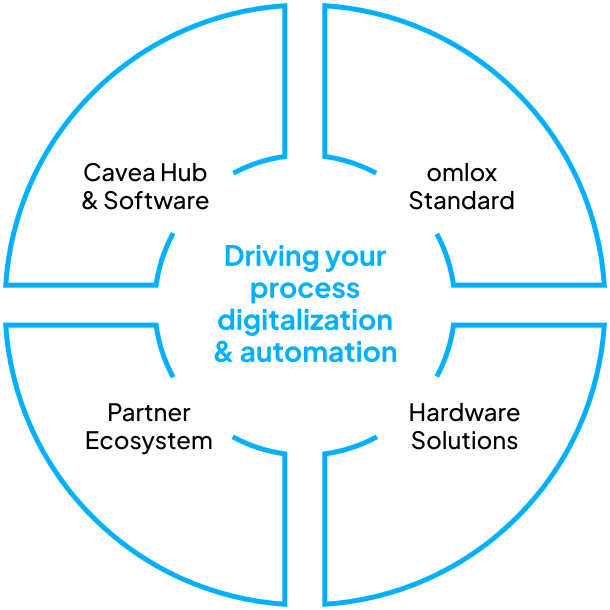
Our 4 building blocks for your success.

Cavea Hub & Software.

Leverage our comprehensive Cavea software suite for data analytics, process automation, or take advantage of the APIs to transfer data directly into your systems (ERP, WMS, MES)…..

Partner Ecosystem.

Strong partner ecosystem with system integrators and specialized software and hardware providers.

Arrow in Cavea blue
Arrow in Cavea blue
Arrow in Cavea blue
Arrow in Cavea blue

omlox Standard

Break free from vendor lock-in with the open omlox standard. Seamlessly integrate position and sensor data from multiple providers.

Hardware solutions.

Experience our proven and industry-leading hardware, already trusted by over 28,000 customers.

Which RTLS Technology Is Right for Your Hospital?

The choice depends on precision, latency and battery life, and these three are also the main TCO levers.

  • UWB: highest precision, for example to assign devices to a specific room; the fixed receivers are called satellites.
  • Cavea Mesh: battery-powered with up to 10 years of battery life and low infrastructure effort, ideal for large hospital campuses and fast scaling.

In the signal flow, tags send to the anchors as direct receivers; gateways forward the position data. Cavea is omlox-compliant, and precise UWB positioning corresponds to the omlox core zone. See the technology page for the full comparison.

See the technology page for the full comparison:

What other companies say

Frequently asked questions about RTLS in the hospital

What does RTLS bring to a hospital?

RTLS continuously tracks medical devices and equipment in real time. This cuts search times for nursing and biomedical staff, improves the utilization of expensive rental and pool devices and protects against loss and theft. That leaves more time for patient care instead of searching.

Which devices can be located?

Typically mobile medical devices such as infusion pumps, ventilators, beds, wheelchairs and diagnostic devices. The tags are small and long-lasting, so even large device pools can be equipped economically.

What accuracy is possible?

It depends on the technology. UWB reaches accuracies below 10 centimeters. For many clinical applications, room or area-level location with lower infrastructure effort is sufficient.

Which RTLS technology is right for a hospital?

The choice depends on precision, latency and battery life, the three main TCO levers. UWB offers the highest precision; the fixed receivers are called satellites. Cavea Mesh is battery-powered with up to 10 years of battery life and low infrastructure effort, ideal for large hospital campuses.

What about data protection and personal data?

The focus is on locating devices and equipment, not people. Where personal safety is relevant, such as wander protection or alerting in hazardous situations, this is implemented as a narrowly scoped safety use case and in line with GDPR, in coordination with the responsible bodies.

Is Cavea's RTLS solution omlox-compliant?

Yes. Cavea hardware is omlox-compliant. The precise UWB positioning corresponds to the omlox core zone, and further technologies can be connected as complementary zones. This keeps the solution interoperable and easy to integrate into existing hospital information systems.

Get started with your Smart Hospital!