- Cavea GmbH
- omlox: the Open Standard for RTLS Explained | Cavea
omlox: The open standard for real-time location tracking.
- 8 min. reading time
- Updated June 2026
- Pillar Guide
Content
-
Key Points at a Glance
- omlox is an open standard, not a product or a single technology.
- The UWB Core Zone provides sub-10-cm positioning, and the air interface makes it compatible across manufacturers.
- Complementary Zones (RFID, BLE, Cavea Mesh, GPS, Wi-Fi) complement the precise Core Zone.
- The omlox Hub standardizes all location data, but must be purchased as a product.
Was ist omlox?
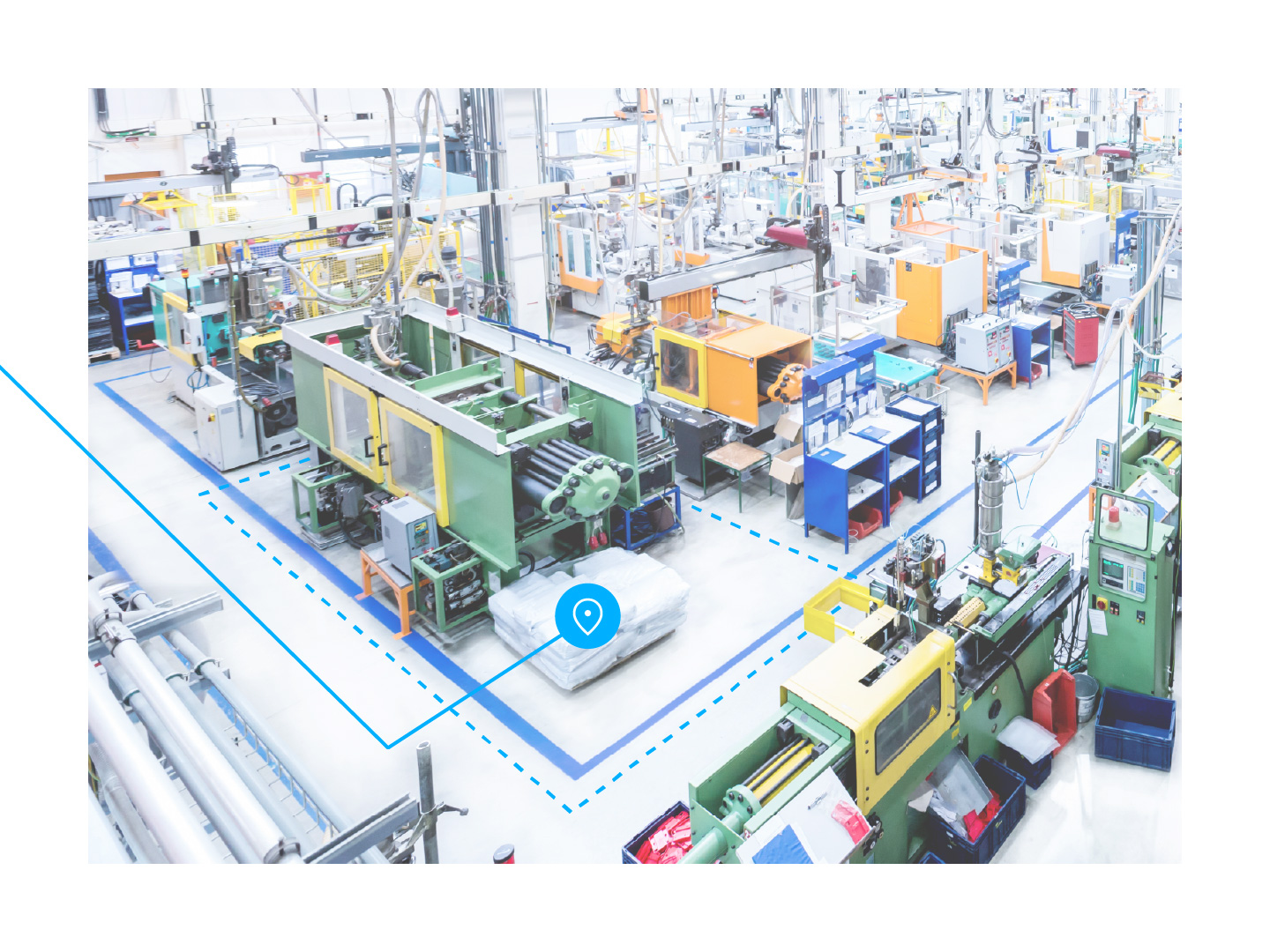
omlox is an open standard for real-time localization that enables interoperability among various location technologies, including UWB, RFID, BLE, GPS, and Wi-Fi. Instead of isolated solutions, tags, anchors, gateways, and software from different vendors work together within a single system.
Omlox is maintained by the PROFIBUS User Organization (PNO) and PI—the same organizations behind PROFIBUS, PROFINET, and IO-Link. This makes omlox an established, widely supported industry standard.
UWB
AoA
Cavea Mesh
BLE
RFID
GPS
WiFi
The omlox Architecture
From the geofence to the software application: precise and complementary zones provide location data to the omlox Hub, which standardizes it and forwards it to your systems.
Physical Level · Detection Zones
omlox Core Zone
UWB · < 10 cmPrecise positioning using ultra-wideband. Fixed satellites and mobile tags via the air interface.
Complementary Zones
In additionThey complement the Core Zone in terms of range, cost, outdoor use, or energy consumption.
Software Layer
omlox Hub
Collects location data from all zones, standardizes it via an API, and creates the digital twin.
Applications Layer
Core Zone and air-interface
At the heart of precise positioning is the Core Zone, which is based on Ultra-Wideband (UWB). It consists of fixed satellites and mobile tags. UWB provides robust positioning with an accuracy of less than 10 centimeters, while being resistant to interference and consuming little energy.
The air interface—the standardized radio and communication protocol between tags and satellites—is crucial for vendor independence. Because omlox-compliant devices implement the same air interface, they automatically recognize each other and work together according to the plug-and-play principle.
- Accuracy of less than 10 cm with low susceptibility to interference and low power consumption
- Standardized air interface according to IEEE 802.15.4 and 802.15.4z
- In-band UWB signal plus narrowband out-of-band radio for administrative tasks
- Plug-and-Play: Satellites and tags from different manufacturers automatically recognize each other
Technisch nach IEEE 802.15.4 und 802.15.4z: In-Band UWB kombiniert mit schmalbandigem Out-of-Band Funk.
Complementary Zones
All other RTLS technologies fall under the category of Complementary Zones. They complement the precise UWB Core Zone in situations where range, cost, outdoor use, or power consumption are key considerations. This allows for the combination of precise and complementary positioning within a shared, open architecture.
RFID
Batch entry and posting points without a line of sight.
Cavea Mesh
A self-healing mesh wireless network for large numbers of devices across wide areas.
BLE
Cost-effective tracking of many assets at the zone level.
GPS
Seamless tracking outdoors and on the yard.
WiFi
Uses existing infrastructure for rough location tracking.
AoA
Precise positioning based on the angle of incidence of the radio signal.
The omlox Hub, the central component
The omlox Hub is the software layer that collects location data from the various tracking zones, standardizes it via a unified interface, and thus forms the basis for a digital twin of the tracking environment. Applications such as ERP, MES, WMS, cloud analytics, fleet management according to VDA 5050, and cloud robotics connect via the Hub.
Good to Know
Omlox is generally not free. An Omlox Hub must be purchased as a product, for example through Cavea or another provider. The open standard ensures that you are not tied to a single manufacturer for hardware or software. Cavea can supply the hub upon request.
The three core objects in the hub
The omlox data model describes every location environment using just three concepts. They build on one another: A Location Provider provides the position, a Trackable is the real-world object behind it, and a Fence defines the zone where something is supposed to happen.
Location Provider
Trackable
Fence
A zone defined within the hub on the map. When a trackable enters or exits a fence, the hub triggers an event, such as for bookings, alerts, or process steps.
Outlook: Safety and SLAM
Safety (Functional Safety)
A dedicated Safety Working Group is developing omlox with a focus on functional safety, including a potential Safety Core Zone and Safety Zones. It draws on established methods such as ProfiSafe, OPC UA Safety, and collaboration with FiRa (Distance-Bounding).
SLAM Navigation and Perception
Within the Ecosystem: Collaborations with Alliances
Omlox’s collaboration with other standardization organizations—ranging from radio spectrum to AutoID to digital twins—demonstrates that it is future-proof.
UWB Alliance
AIM-D
Interoperability of AutoID Technologies
OPC Foundation
OPC Companion Specification “Global Positioning”
IDTA
Asset Location Submodel of the Administrative Shell
FiRa
Secure Ranging for Safety-Critical Applications
PNO / PI
The organization behind PROFIBUS and PROFINET
omlox and Cavea
Cavea is an active omlox partner and is committed to standardization and interoperability. Its hardware is omlox-compliant and manufactured in the EU. Cavea combines the open standard with a broad technology portfolio, its own firmware, and its own location engine.
- omlox-compliant hardware, manufactured in the EU
- Proprietary firmware and proprietary location engine
- Tribrid tags combine AoA or UWB with Cavea Mesh, BLE, and RFID
- Upon request, Cavea also supplies the omlox Hub

Frequently Asked Questions
Was ist omlox?
omlox is an open standard for real-time localization that enables interoperability between various positioning technologies, such as UWB, RFID, BLE, GPS, and Wi-Fi. Tags, anchors, gateways, and software from different vendors work together within a single system. omlox is maintained by the PROFIBUS User Organization (PNO) and PI.
Is omlox free?
Generally speaking, no. The standard ensures vendor independence, but an Omlox hub must be purchased as a product, for example through Cavea or another provider. You are not tied to a single vendor for either hardware or software.
What is the omlox Core Zone?
The Core Zone is a high-precision localization zone based on Ultra-Wideband (UWB). It consists of fixed satellites and mobile tags and provides accuracy of less than 10 centimeters with low power consumption.
What is the omlox air interface?
The air interface is the standardized radio and communication protocol between tags and satellites, as defined in the Core Zone specification. Because Omlox-compliant devices implement the same air interface, they work together across manufacturers according to the plug-and-play principle.
Which RTLS is right for your use case?
Book a no-obligation consultation.

