More Efficient Processes with the Real-Time Tracking System in Digital Manufacturing
The industry is undergoing a transformation: Companies are increasingly relying on real-time data to make processes more transparent, flexible, and efficient. The shortage of skilled workers and an aging workforce are among the key factors that companies must actively address. A key technology for this is a real-time tracking system that tracks the location of assets, pallets, and production orders in real time.
But aside from the shortage of skilled workers, what other challenges exist in manufacturing today that make the use of RTLS so valuable?
The Challenges Facing the Manufacturing Industry and How RTLS Solves Them
Many production managers struggle with inefficient processes, inaccurate location information and long search times. A lack of transparency in work-in-progress (WIP) leads to delays, while paper-based documentation and delayed material replenishment inhibit productivity.
A proven first step towards optimization is value stream analysis. It helps companies identify waste in production processes, visualize bottlenecks and improve material flow. However, traditional value stream analysis is often based on manual data collection.
This is where a real-time localization system comes into play: by automatically capturing location and movement data, it provides precise, data-based insights into material and production flow. Companies can not only analyze bottlenecks once, but continuously monitor and optimize their processes in real time.
Benefits of RTLS in the manufacturing industry
The introduction of real-time localization systems (RTLS) offers numerous advantages for companies. The precise location tracking of goods carriers, tools and materials allows processes to be optimized, resources to be used more efficiently and costs to be reduced. At the same time, employees benefit from reduced search times and increased productivity.
Process optimization through precise location tracking
With RTLS, companies always have an overview of the location of tools, materials or transport vehicles. This reduces long search times and optimizes the flow of materials in production. By minimizing machine downtime due to missing equipment, production processes run more smoothly.
Time savings for employees
A major advantage of RTLS is the significant reduction in search times. Production employees no longer have to spend valuable minutes or even hours finding tools or materials. This allows them to focus more on their core tasks, which has a direct impact on productivity and satisfaction in their day-to-day work. The same workforce can handle more work and actively counteract the shortage of skilled workers.
Reducing costs through better resource utilization
RTLS enables more targeted use of resources. By knowing the current location and status of their operating resources at all times, companies can avoid overstocking or stockouts. For example, the exact demand for forklifts can be calculated and adjusted based on actual usage.
Paperless processes and sustainability
RTLS is driving digital transformation and fully digitizing paper-based processes. Manual documentation, routing slips and inventory lists are no longer needed, which increases efficiency. At the same time, reduced paper consumption lowers the environmental impact and improves sustainability.
The targeted use of RTLS technologies can therefore optimize production processes, reduce costs and make workflows more efficient – a decisive competitive advantage for manufacturing.
Use cases for RTLS in manufacturing
Real-time order tracking & automated process management
In a modern production environment, it is crucial to know the current status of an order at all times. RTLS technology makes it possible to track production orders in real time, so that production managers know exactly where a product is in the manufacturing process. Automatic status updates seamlessly track work-in-progress (WIP) and detect delays and bottlenecks early on. At the same time, the system can automatically trigger processes – for example, the replenishment of materials or a downstream quality inspection.
Asset Tracking: Keep an eye on materials and tools at all times
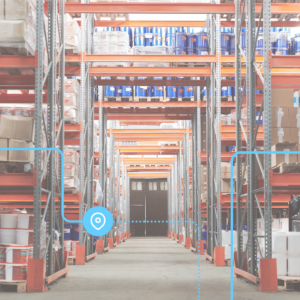
Missing tools or materials often lead to production stoppages. With RTLS, companies can keep track of all assets in the manufacturing environment. Employees can find the equipment they need immediately, without having to search for it. The system monitors the use of tools and reports immediately if they are used outside the designated area. This increases efficiency and safety in production.
Material Replenishment (eKanban) for Smooth Processes
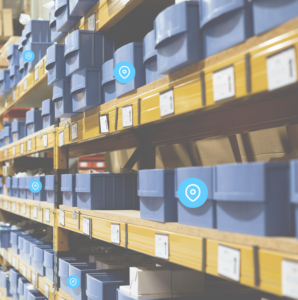
An efficient flow of materials is crucial for preventing production interruptions. With RTLS and a smart eKanban System the material supply is automated and seamlessly managed. Cavea uses trackable ESL tags (ePaper) on every load carrier to monitor inventory in real time. Without any manual scanning, the system sends automatic restocking notifications so that the necessary materials are made available in a timely manner. Thanks to direct synchronization with ERP and other inventory management systems, production managers always have an accurate overview of the current material status. Manual entries and time-consuming inspection rounds are eliminated, which reduces errors and increases productivity. The result: a continuous flow of materials that prevents bottlenecks and keeps production running smoothly.
Automated process quality control
Quality assurance plays a crucial role in manufacturing. With RTLS-based process control, companies can automate quality inspections and increase their efficiency. This ensures that process steps are carried out in the correct order and that materials are only processed within the allotted time. As a result, the error rate is reduced and production standards are reliably met.
With these practical RTLS applications, companies can optimize their production processes, avoid bottlenecks and sustainably increase efficiency in manufacturing.
Implementing RTLS: What should companies look out for?
The successful introduction of a real-time localization system (RTLS) requires careful planning to ensure maximum benefit for production.
One crucial aspect is the question of how accurately objects need to be tracked and how often position updates are required. The higher the precision and the update rate, the more complex and costly the implementation. It is therefore advisable to use high-precision technologies only where they are really needed – for example, for critical production processes. In less sensitive areas, a more cost-effective solution with a lower update rate may suffice.
Selecting the right technology for the respective application
The choice of the appropriate RTLS technology depends on the specific requirements and the application. Cavea’s Tribrid® tag is an ideal solution because it integrates multiple technologies—such as BLE, RFID, Cavea Mesh, and AOA—and enables companies to use the best technology for each specific use case.

Conclusion: RTLS as a key technology for digital manufacturing
Real-time localization is a central building block of modern manufacturing. It optimizes production processes, reduces search times, improves resource utilization and ensures seamless automation. Companies that rely on RTLS technologies benefit from higher efficiency, lower costs and increased production quality. This helps to counteract current challenges such as the shortage of skilled workers.
As digitalization continues to advance, RTLS will play an even greater role in industry. Integration with existing IT systems, open standards such as omlox, and flexible solutions such as the Tribrid® tag enable a scalable and future-proof implementation.
Now is the right time to test the advantages of RTLS in your own production. Companies that want to optimize their manufacturing processes and remain competitive should act now.
Find out more about our solutions and start your smart factory transformation!